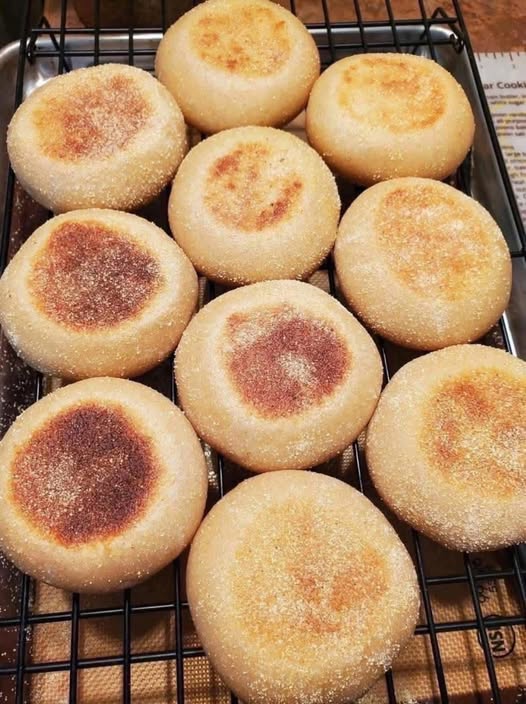
Homemade English Muffins
Soft, Golden, and Perfect for Breakfast Sandwiches
If you love warm, toasted bread for breakfast, homemade English muffins are one of the most satisfying recipes you can make in your own kitchen. These classic round breads are known for their light texture, slightly chewy interior, and signature nooks and crannies that perfectly hold melted butter, jam, or honey.
English muffins are a staple in many breakfast menus around the world. They are commonly used for breakfast sandwiches, eggs Benedict, or simply toasted with butter. While store-bought versions are convenient, homemade English muffins have a fresher taste and softer texture that is hard to beat.
The best part is that English muffins are surprisingly easy to prepare with just a few basic pantry ingredients. Unlike most breads, they are cooked on a skillet or griddle instead of baked in the oven, which gives them their unique golden crust and tender interior.
In this detailed recipe guide, you will learn how to make soft, fluffy English muffins from scratch, including tips for perfect texture, proofing methods, cooking temperature, and storage ideas.
What Are English Muffins?
English muffins are small round yeast breads traditionally cooked on a griddle rather than baked. They are typically split open with a fork rather than cut with a knife. This technique helps create the famous airy pockets and holes inside the bread.
These little pockets are what make English muffins ideal for holding butter, jam, peanut butter, or breakfast sandwich fillings.
Although they are called English muffins, they are quite different from sweet American-style muffins. Instead of being cake-like, English muffins are more similar to soft bread rolls with a slightly crisp crust.
Why Make English Muffins at Home?
Homemade English muffins offer many benefits compared to store-bought versions.
Fresh Flavor
Nothing compares to the taste of freshly cooked bread with a warm, soft interior.
Simple Ingredients
You control the ingredients and avoid preservatives commonly found in packaged breads.
Customizable
You can adjust the recipe by adding whole wheat flour, herbs, or seeds.
Budget-Friendly
Making English muffins at home costs much less than buying them from bakeries.
Key Ingredients for English Muffins
This recipe uses simple pantry ingredients that work together to create the perfect texture and flavor.
All-Purpose Flour
Provides structure and creates a soft bread texture.
Active Dry Yeast
Helps the dough rise and creates the fluffy interior.
Warm Milk
Adds richness and helps activate the yeast.
Sugar
Feeds the yeast and adds mild sweetness.
Butter
Adds flavor and tenderness to the muffins.
Salt
Enhances flavor and balances the sweetness.
Cornmeal
Used to dust the muffins, preventing sticking and giving them their classic texture.
Tips for Perfect English Muffins
Making English muffins is easy, but a few helpful techniques ensure the best results.
Use Warm Liquid for Yeast
The milk should be warm but not hot. The ideal temperature is around 105–110°F (40–43°C) to activate yeast properly.
Allow Enough Rising Time
Proper proofing helps develop flavor and creates a soft texture.
Cook Slowly on Low Heat
English muffins cook slowly on a skillet. This allows the inside to cook fully without burning the outside.
Split with a Fork
Instead of slicing with a knife, use a fork to split the muffins. This preserves the airy interior pockets.
Step-by-Step Guide to Making English Muffins
The process includes mixing the dough, allowing it to rise, shaping the muffins, and cooking them on a griddle.
Once you master the technique, homemade English muffins become a recipe you will return to again and again.
Ingredients
- 3 cups all-purpose flour
- 2 teaspoons active dry yeast
- 1 tablespoon sugar
- 1 teaspoon salt
- 1 cup warm milk (about 110°F / 43°C)
- 2 tablespoons melted butter
- ½ cup warm water
- Cornmeal for dusting
Preparation Time
- Prep Time: 20 minutes
- Rise Time: 1 hour
- Cooking Time: 20 minutes
- Total Time: About 1 hour 40 minutes
Instructions
Step 1: Activate the Yeast
In a small bowl, combine the warm milk, sugar, and yeast. Stir gently and let it sit for 5–10 minutes until the mixture becomes foamy. This indicates the yeast is active.
Step 2: Mix the Dough
In a large mixing bowl, combine flour and salt. Add the yeast mixture, melted butter, and warm water. Stir until a soft dough forms.
Step 3: Knead the Dough
Transfer the dough to a lightly floured surface and knead for 8–10 minutes until smooth and elastic.
If using a stand mixer, knead with a dough hook on medium speed for 5–6 minutes.
Step 4: First Rise
Place the dough in a lightly greased bowl and cover with a towel or plastic wrap. Let it rise in a warm place for about 1 hour or until doubled in size.
Step 5: Shape the Muffins
After rising, gently punch down the dough and roll it out to about ½ inch thickness.
Use a round cutter or glass to cut out circles.
Step 6: Second Rise
Place the dough rounds on a baking sheet dusted with cornmeal. Sprinkle additional cornmeal on top.
Cover and let them rise again for 20–30 minutes.
Step 7: Cook the Muffins
Heat a large skillet or griddle over low to medium heat (around 300°F / 150°C).
Place the muffins on the skillet and cook for 6–8 minutes per side until golden brown.
If the muffins brown too quickly, lower the heat.
Step 8: Cool and Split
Transfer cooked muffins to a cooling rack. Allow them to cool before splitting with a fork.
Serving Ideas
English muffins are extremely versatile and can be served in many delicious ways.
Classic Butter and Jam
Toast the muffin and spread with butter and your favorite fruit jam.
Breakfast Sandwich
Fill with scrambled eggs, cheese, and sausage or bacon.
Eggs Benedict
Top toasted muffins with poached eggs, ham, and hollandaise sauce.
Peanut Butter and Honey
A simple, nutritious breakfast option.
Storage Tips
Homemade English muffins store well for later use.
Room Temperature
Store in an airtight container for 2 days.
Refrigerator
They can last up to 1 week in the fridge.
Freezer
Freeze for up to 3 months. Toast directly from frozen.
Nutritional Information (Per Muffin – Approximate)
- Calories: 180
- Carbohydrates: 32 g
- Protein: 5 g
- Fat: 3 g
- Saturated Fat: 1.5 g
- Fiber: 2 g
- Sugar: 2 g
- Sodium: 210 mg
Why This English Muffin Recipe Works
This recipe creates English muffins that are soft inside with a lightly crisp exterior. Cooking them slowly on a skillet ensures they cook evenly and develop the classic texture English muffins are known for.
The yeast gives the muffins their airy interior, while the cornmeal adds the traditional bakery-style finish.
Once you try these homemade English muffins, you may never go back to store-bought versions. They are perfect for breakfast, brunch, or even quick snacks throughout the day