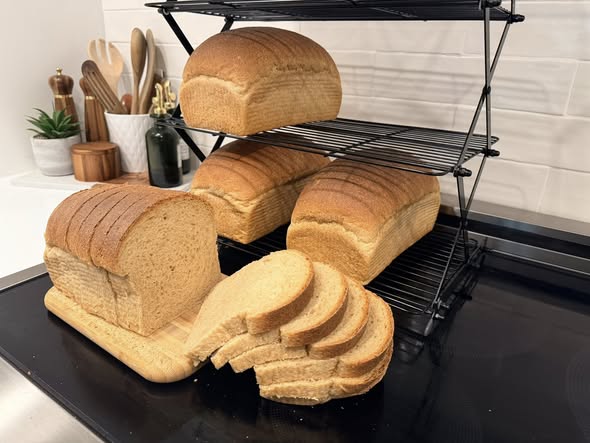
Super Soft Fresh Milled Sandwich Bread
This Super Soft Fresh Milled Sandwich Bread is everything homemade bread should be—light, fluffy, tender, and full of wholesome flavor. Made with freshly milled wheat flour, this bread has a soft texture that’s perfect for sandwiches, toast, French toast, grilled cheese, or simply enjoying with butter. Unlike many whole wheat breads that can be dense or dry, this recipe produces a remarkably soft loaf with excellent rise and a delicate crumb.
Freshly milled flour adds incredible flavor, nutrition, and freshness that store-bought flour simply can’t match. With the right balance of hydration, fat, and sweetener, you’ll create bakery-quality sandwich bread that stays soft for days.
Why You’ll Love This Recipe
- Made with freshly milled flour
- Super soft and fluffy texture
- Perfect for sandwiches
- Nutritious whole-grain goodness
- Freezes beautifully
- Great for meal prep
- No preservatives
- Family-friendly flavor
Prep Time, Rise Time & Yield
Prep Time: 25 minutes
First Rise: 60–90 minutes
Second Rise: 45–60 minutes
Bake Time: 30–35 minutes
Total Time: About 3 hours
Yield: 2 standard sandwich loaves
Oven Temperature: 350°F (175°C)
Ingredients
For the Dough
- 6 cups (720g) freshly milled hard white wheat flour
- 2¼ teaspoons (7g) instant yeast
- 2 teaspoons salt
- ⅓ cup (80g) honey
- ¼ cup (60g) unsalted butter, softened
- 2 cups (480ml) warm milk
- 2 large eggs
- 1 tablespoon vital wheat gluten (optional but recommended)
Optional Topping
- Melted butter for brushing
- Oats or seeds for topping
Equipment Needed
- Grain mill
- Stand mixer with dough hook (optional)
- Large mixing bowl
- Two 9×5-inch loaf pans
- Kitchen thermometer
- Cooling rack
Instructions
Step 1: Mill the Flour
Mill enough hard white wheat berries to produce approximately 6 cups (720g) of fresh flour.
Use the flour immediately for the best flavor and performance.
Step 2: Activate the Yeast
Warm the milk to 105–110°F (40–43°C).
In a large mixing bowl, combine:
- Warm milk
- Honey
- Yeast
Allow the mixture to sit for 5 minutes until foamy.
If using instant yeast, you can skip this proofing step and mix directly.
Step 3: Mix the Dough
Add:
- Eggs
- Softened butter
- Salt
- Vital wheat gluten (if using)
Gradually add the freshly milled flour.
Mix until a shaggy dough forms.
Step 4: Knead
Knead by hand or with a stand mixer for 8–10 minutes.
The dough should become smooth, elastic, and slightly tacky.
Freshly milled flour absorbs liquid gradually, so resist adding too much extra flour.
Step 5: First Rise
Place the dough in a lightly greased bowl.
Cover and allow to rise in a warm location for 60–90 minutes, or until doubled in size.
Ideal rising temperature:
75–80°F (24–27°C)
Step 6: Shape the Loaves
Punch down the dough gently.
Divide into two equal portions.
Shape each into a tight loaf.
Place into greased 9×5-inch loaf pans.
Step 7: Second Rise
Cover loosely and allow the loaves to rise for 45–60 minutes.
The dough should rise approximately 1 inch above the rim of the pans.
Step 8: Bake
Preheat oven to 350°F (175°C).
Bake for 30–35 minutes, or until:
- Tops are golden brown
- Internal temperature reaches 190–200°F (88–93°C)
If the tops brown too quickly, tent loosely with foil.
Step 9: Brush with Butter
Immediately after baking, brush the tops with melted butter.
This keeps the crust soft and adds flavor.
Step 10: Cool
Remove loaves from pans after 10 minutes.
Cool completely on a wire rack before slicing.
For best texture, wait at least 1 hour before cutting.
Tips for Success
Use Hard White Wheat
Hard white wheat produces a softer, lighter loaf compared to hard red wheat.
Don’t Add Too Much Flour
Freshly milled flour absorbs moisture over time.
A slightly sticky dough usually produces softer bread.
Knead Thoroughly
Proper gluten development creates a better rise and softer crumb.
Measure by Weight
Using a kitchen scale improves consistency and accuracy.
Use Vital Wheat Gluten
Adding gluten helps improve the structure and softness of whole grain bread.
Variations
Honey Wheat Sandwich Bread
Increase honey to ½ cup for a slightly sweeter loaf.
Milk and Honey Bread
Replace water completely with milk for extra softness.
Oatmeal Sandwich Bread
Add ½ cup rolled oats to the dough.
Seeded Sandwich Bread
Mix in sunflower seeds, flaxseeds, or sesame seeds.
Cinnamon Raisin Bread
Add 1 cup raisins and a cinnamon-sugar swirl.
Storage Instructions
Room Temperature
Store in an airtight bread bag for up to 4 days.
Refrigerator
Not recommended, as refrigeration can dry bread out.
Freezer
Wrap tightly and freeze for up to 3 months.
Thaw at room temperature before serving.
Serving Suggestions
Perfect for:
- Sandwiches
- Toast
- Grilled cheese
- French toast
- Peanut butter sandwiches
- Avocado toast
- Breakfast toast with jam
Nutritional Information
Per Slice (Based on 24 Slices Total)
- Calories: 145
- Protein: 5g
- Fat: 3g
- Saturated Fat: 1g
- Carbohydrates: 25g
- Fiber: 3g
- Sugar: 3g
- Sodium: 170mg
Nutrition values are estimates and may vary depending on ingredients used.
Frequently Asked Questions
What Is Fresh Milled Flour?
Fresh milled flour is made by grinding whole wheat berries immediately before baking, preserving nutrients, flavor, and natural oils.
Why Is My Bread Dense?
Common causes include under-kneading, insufficient rise time, or adding too much flour.
Can I Use Hard Red Wheat?
Yes, though the bread will have a stronger wheat flavor and slightly denser texture.
Is Vital Wheat Gluten Necessary?
No, but it helps create a softer, higher-rising loaf.
How Do I Keep Homemade Bread Soft?
Store it in an airtight container and brush the loaf with butter after baking.