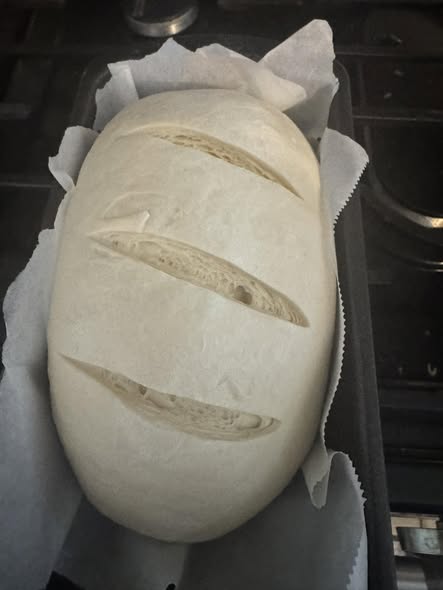
Sourdough Sandwich Loaf
A sourdough sandwich loaf is the perfect everyday bread—soft, fluffy, slightly tangy, and sturdy enough for sandwiches, toast, or grilled cheese. Unlike rustic sourdough boules with thick crusts, this loaf is baked in a pan, giving it a tender crust and a soft, sliceable crumb that works beautifully for daily meals.
This recipe uses an active sourdough starter instead of commercial yeast, allowing the bread to ferment naturally. The result is better flavor, improved digestibility, and a loaf that stays fresh longer. Whether you want bread for breakfast toast, school lunches, or hearty sandwiches, this homemade sourdough sandwich loaf will quickly become a staple in your kitchen.
Below you’ll find a complete 1200-word style website recipe including preparation time, baking temperature, step-by-step instructions, tips, and nutrition information.
Why You’ll Love This Sourdough Sandwich Loaf
There are many reasons home bakers love making sourdough sandwich bread.
Soft texture – The loaf has a tender crumb that slices easily without crumbling.
Natural fermentation – Made with sourdough starter rather than commercial yeast.
Better flavor – Slightly tangy and rich compared to store-bought bread.
Great for sandwiches – Uniform slices perfect for lunch or toast.
Freezer friendly – You can store slices for weeks.
Unlike rustic sourdough breads that require complex shaping and baking techniques, this loaf is simple and beginner-friendly.
Recipe Overview
Prep Time: 20 minutes
First Rise: 6–8 hours (or overnight)
Second Rise: 1–2 hours
Bake Time: 35–40 minutes
Total Time: 8–10 hours
Baking Temperature: 375°F (190°C)
Yield: 1 large sandwich loaf (10–12 slices)
Ingredients
- 1 cup active sourdough starter (240 g)
- 1 cup warm water (240 ml)
- 2 tablespoons sugar or honey
- 3 tablespoons olive oil or melted butter
- 1½ teaspoons salt
- 3–3½ cups bread flour (360–420 g)
Optional for softer bread:
- 2 tablespoons milk powder
Equipment Needed
- Mixing bowl
- Wooden spoon or dough whisk
- 9×5 inch loaf pan
- Kitchen towel or plastic wrap
- Cooling rack
Step-by-Step Instructions
Step 1: Activate the Starter
Before beginning, make sure your sourdough starter is active and bubbly.
Feed the starter 4–6 hours before baking so it becomes strong and ready to rise the dough.
A healthy starter should:
- Double in size
- Have a pleasant sour smell
- Be full of bubbles
This ensures the loaf rises properly.
Step 2: Mix the Dough
In a large mixing bowl combine:
- sourdough starter
- warm water
- sugar or honey
- olive oil or melted butter
Mix until well combined.
Next add:
- salt
- 3 cups bread flour
Mix until a soft dough forms.
If the dough feels too sticky, gradually add the remaining flour one tablespoon at a time until the dough becomes soft but manageable.
Step 3: Knead the Dough
Turn the dough onto a lightly floured surface.
Knead for 8–10 minutes until the dough becomes:
- smooth
- elastic
- slightly tacky but not sticky
If using a stand mixer, knead with the dough hook for 5–6 minutes.
Proper kneading develops gluten, which creates the soft structure needed for sandwich bread.
Step 4: First Rise (Bulk Fermentation)
Place the dough in a lightly greased bowl.
Cover with:
- plastic wrap
or - a clean kitchen towel
Allow the dough to rise at room temperature for 6–8 hours, or until it doubles in size.
Because sourdough fermentation is slower than yeast bread, patience is important.
For deeper flavor, you can also place the dough in the refrigerator overnight.
Step 5: Shape the Loaf
Once the dough has doubled:
- Turn it onto a lightly floured surface.
- Gently flatten it into a rectangle.
- Roll the dough tightly into a log.
- Pinch the seam closed.
Place the shaped dough seam-side down into a greased 9×5 inch loaf pan.
Step 6: Second Rise
Cover the loaf pan loosely with a towel or plastic wrap.
Let the dough rise for 1–2 hours, until it rises about 1 inch above the rim of the pan.
This second rise creates the classic tall sandwich loaf shape.
Step 7: Bake the Bread
Preheat your oven to:
375°F (190°C)
Bake the loaf for 35–40 minutes.
The bread is ready when:
- the crust is golden brown
- the internal temperature reaches 190–200°F (88–93°C)
If the crust browns too quickly, cover the loaf loosely with aluminum foil during the final 10 minutes.
Step 8: Cool Before Slicing
Remove the loaf from the pan immediately after baking.
Place it on a cooling rack and allow it to cool for at least 1 hour before slicing.
Cutting too early may cause the bread to become gummy.
Tips for Perfect Sourdough Sandwich Bread
Use Active Starter
Your starter should be bubbly and active. Weak starter leads to dense bread.
Don’t Add Too Much Flour
The dough should remain slightly soft. Too much flour creates dry bread.
Allow Enough Rising Time
Sourdough takes longer to rise than commercial yeast. Let it double fully.
Use Bread Flour
Bread flour contains more protein and gives better structure than all-purpose flour.
Brush with Butter
For an extra soft crust, brush the loaf with melted butter right after baking.
Variations
This sourdough sandwich bread can be customized easily.
Honey Wheat Bread
Replace half the bread flour with whole wheat flour.
Seeded Sandwich Bread
Add:
- sunflower seeds
- sesame seeds
- flax seeds
Herb Bread
Mix in:
- rosemary
- garlic powder
- dried oregano
Milk Bread Version
Replace water with warm milk for an even softer crumb.
How to Store Sourdough Sandwich Bread
Room Temperature
Store in an airtight container or bread bag for 3–4 days.
Refrigerator
Not recommended because it can dry out the bread.
Freezer
Slice the bread and freeze for up to 3 months.
Simply toast slices directly from frozen.
Serving Ideas
This loaf works for many meals.
Breakfast
- toast with butter
- avocado toast
- peanut butter and honey
Lunch
- turkey sandwich
- grilled cheese
- egg salad sandwich
Dinner
- garlic toast
- soup side bread
- toasted sandwich melts
Troubleshooting
Bread Didn’t Rise
Possible reasons:
- inactive starter
- cold room temperature
- not enough fermentation time
Dense Texture
Caused by:
- adding too much flour
- under-proofing
Sticky Dough
Add flour gradually during kneading, but keep the dough soft.
Nutrition Information (Per Slice)
Approximate values for 1 slice (based on 12 slices)
Calories: 160
Carbohydrates: 30 g
Protein: 5 g
Fat: 3 g
Fiber: 1 g
Sugar: 2 g
Sodium: 210 mg
Nutrition may vary depending on ingredients used.